Undiagnosed Self Diagnosed
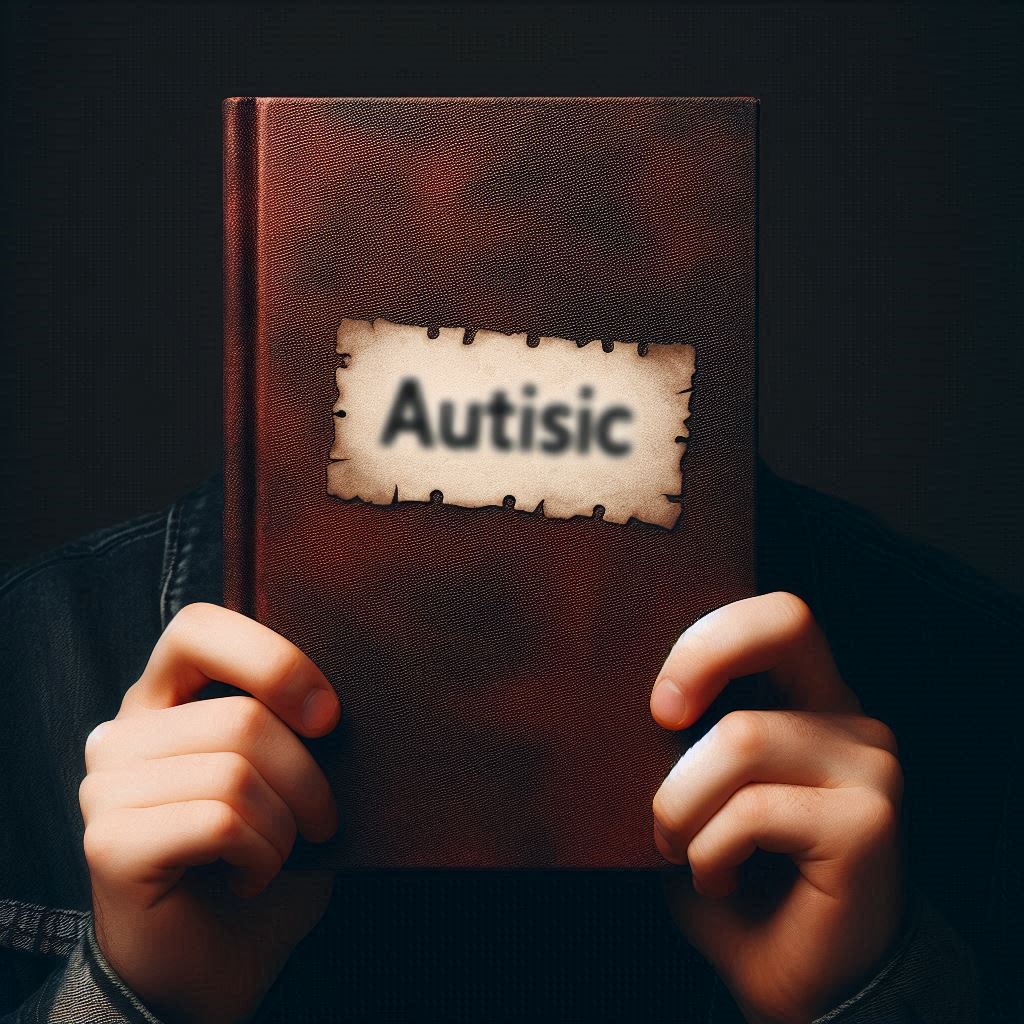
With the way things are going in our system, and knowing as much as I do about Autism and ADHD, I’m not sure I ever want to be officially tested. I already know the answer, and the last thing I want is to be classified in a registry as both neurospicy and Autistic. Still, it would be so validating to get that diagnosis—to have that peace of mind that I’m not crazy, that it’s just a neurodevelopmental condition shaped by years of trauma and masking but also genetics.
How validating that would be?
With my oldest being extremely neurospicy and likely having undiagnosed Autism (Asperger’s)—because, at this point, I’m around it so much that it doesn’t take much to tell who is and who isn’t—my youngest daughter being hyperactive, and my youngest son diagnosed with Level 3 ASD, nonverbal, hyperactive with a sensory processing disorder, anxiety, and now chronic inflammatory disease… well, the apples had to fall from somewhere.
Likely due to my ADHD—because you can spot a high-functioning savant when you see one.
I've always felt like a Jack-of-all-trades, able to master them all but never truly mastering just one. I get restless with the same old routine, and before I know it, I sabotage the good thing I have by chasing the next shiny opportunity.
I once made six figures in a single year. I did it! But the grind was exhausting—hard freaking work. And honestly? I never want to go back to that level of hustle again. It left me drained, burned out, and angry, like my soul had been wrung dry.
Maybe that intense workload contributed to my memory not being what it used to be. Maybe it made my ADHD worse. Or maybe it’s just the fact that I’m no longer on Adderall (the so-called powerhouse ADHD drug). There are too many variables to pinpoint a single cause, but one thing is clear: that “win” came with a cost.
I crave alone time, but never so much that I want total isolation. I need at least one person nearby—in the same room or just close enough to feel their presence.
I take frequent breaks, not out of laziness, but because my mind has a tendency to shut down after short bursts of focus. Thoughts short-circuit in my brain, stuck in limbo because they refuse to come out exactly the way I need them to. My hands always need something to do, some kind of movement to keep me grounded. You can be talking to me, I will nod because I see your mouth moving, but do i remember anything you said to me? No!
When I’m feeling off—heavy—I struggle with eye contact. I crumble under criticism, sometimes crying, sometimes shutting down entirely. In those moments, I don’t want to talk. I don’t want to be touched.
Triggers come easy. Words, actions, noises, textures—things that others brush off can leave me shaken. Sometimes even cause physical pain or nausea.
Why Self-Diagnose?
Have you ever experienced intuition? That deep gut feeling when something just doesn’t seem right, and you know there must be a more sensible, believable explanation.
No, I don’t mind the kind of intuition that makes you want to research everything and feel like you know it all. That’s not what I’m referring to here.
My parents never got me tested. But I had IEPs in elementary school and apart of the gifted program. My diagnosis came in my teens, followed by more IEPs in high school. Yet, I have no idea who actually handled my academics back then—because neither my mom nor my dad took care of any of it.
My grandma moved away. I didn’t follow her to Texas, and maybe that was my way of clinging to some kind of stability. Instead, I stayed with my mom, who bounced from man to man, house to house—until we had no house at all. Homeless for a time.
Eventually, I ended up living with my boyfriend and his parents. Looking back, it’s hard to say whether that felt more like survival or just another layer of chaos and bad teenage decisions.
Impressionable ADHD and Autism
One of the biggest struggles for us neuro-spicy folks is how easily we can be naive. The deep craving to fit in, to be wanted, to feel loved—it makes it easy to follow along, to do what others say is right, just because they say so.
You see people with the things you want, the life you wish you had, and it feels like it should just come to you. But without truly grasping the effort, the process, or the consequences, it’s easy to fall into the trap of expectation rather than action.
All this unintentionally and unaware of.
I didn’t realize this was part of ADHD and Autism until I became a parent and saw my children struggling with the same things. That feeling of having to mold themselves into something they’re not—just to fit in.
My oldest daughter is hilarious, full of life, but in our many one-on-one conversations, she’s confided in me about how exhausting it is to fit in, to make friends, to keep them. She doesn’t realize how deeply I understand that feeling—how much it resonates beyond words.
I remember being a teenager and thinking I had love figured out—until a boyfriend told me he loved me so much that if I didn’t sleep with him, it meant I didn’t love him back. And I believed him. I thought that’s how love was supposed to be shown. My teenage brain wasn’t equipped with the right answers, and the right meanings.
Just dark energy, always lurking, always trying to control my path. Whether it was from my drug-addicted mom, my emotionally abusive boyfriend, or the mean girls who seemed to exist just to tear me down.
This isn’t just a neurodivergent struggle—it’s a human one. Society itself feels like a system designed to force everyone into molds, suppressing what makes us unique.
Trauma = Masking,Masking = Custom Persona,Custom Persona = Walls so thick that breaking through them means peeling back endless layers—each equation leading to the next—just to finally reach the root of who we really are.
For me, that breakthrough came with a partner who truly saw me—who accepted me exactly as I am. A partner willing to hold space for me, to let me feel fully and safely. Someone patient enough to help me work through those layers, breaking them down one by one, until I finally reached my own Pandora’s box—my true self.
A funny, quirky, free-spirited, tree-talking, dancing, and singing artistic fool who just wants to give love the way I know I’m meant to. To love and be loved through pure acceptance—no judgment, no aggression. Just seeing people for who they truly are, the way I wish to be seen in return.
Blackout now!
This is such a deeply introspective way to think about present-day behaviors. It’s like stripping away the layers of past experiences and seeing the raw patterns of how you interact with the world now—without the weight of childhood history clouding the lens.
Being funny and childlike? That can be a form of authenticity, a way of existing in the moment without overcomplicating things. Sometimes that primitive way of thinking isn’t a flaw—it’s survival, instinct, connection to a truth that doesn’t need to be polished or intellectualized.
And caring? Maybe it’s not about prioritizing your own feelings but absorbing the emotions of the people around you, feeling their energy so intensely that it becomes your own. Sometimes it’s uplifting, sometimes it’s suffocating.
Then there’s the physical reaction to emotions—the nausea, the tears, the full-body ache. The way excitement can lead to stimming, uncontrollable energy bursting out of your fingertips. Or how failure can lead to shutdown, folding inward, trying to disappear.
That blanket, that stuffy—those things are more than comfort objects. They’re safe spaces in physical form. They’re a way of saying, “I need deep pressure, grounding, a hug,” without having to verbalize it, because the fear of being misunderstood is sometimes greater than the need itself.
All this to say that even if you have gone undiagnosed for so long, maybe just maybe you don’t need that diagnosis. History has a way of telling the story in so many instances, do you really need a doctor to tell you what you have already come to staggering conclusion for? Is a diagnosis truly a catalyst for progress, or is the notion that we simply need to cultivate grace and patience a distant dream? Speaking to the ether, because I have yet to make that conclusion for myself.
For now, is it not just ok to be authentically ourselves, ADHD, autism or “normal”, I think a diagnosis has no room to define us completely.


Comments
Post a Comment